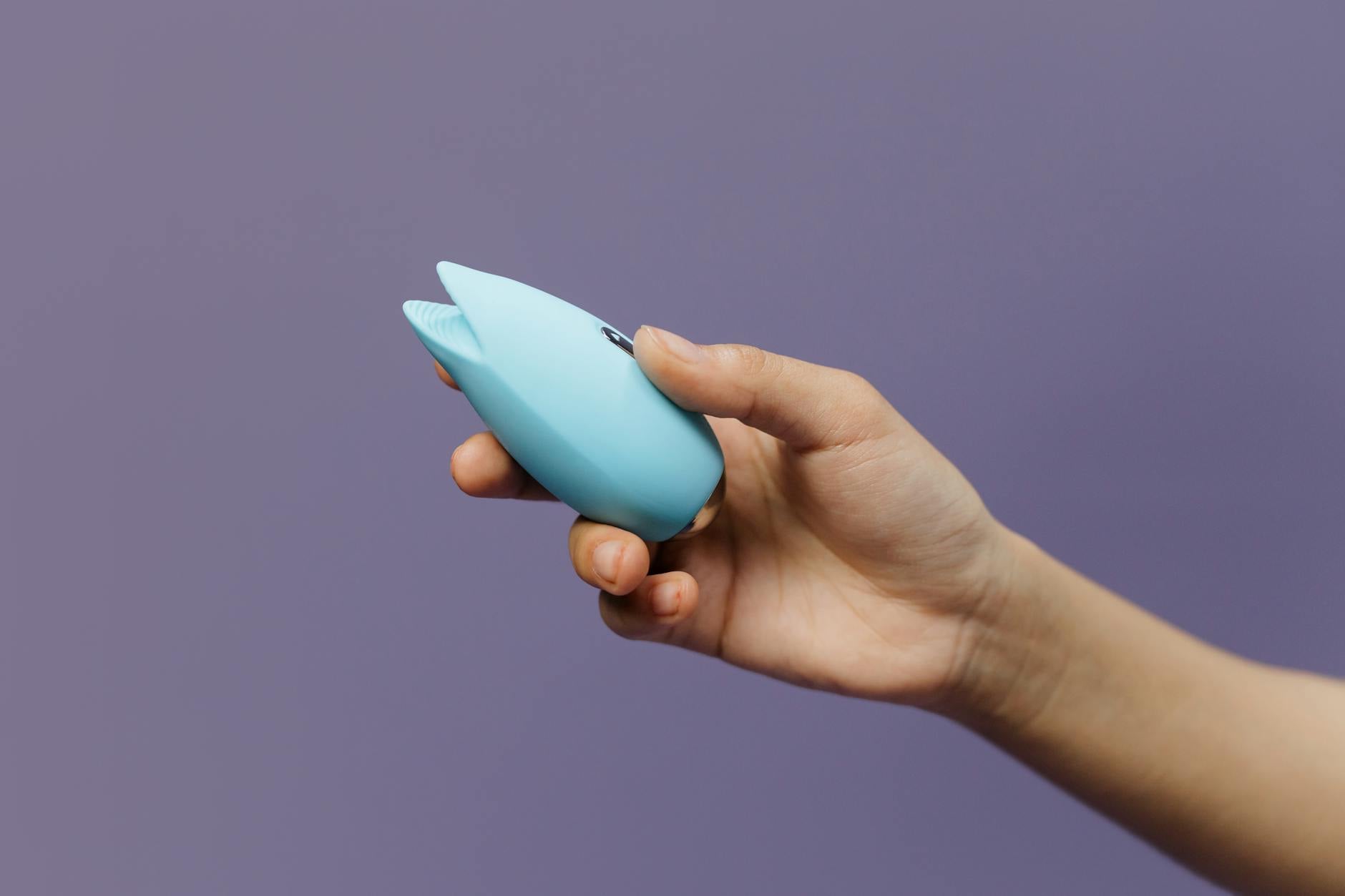
Here's what nobody tells you about warm-up time
Let's be real: if you used to get turned on in about five minutes and now it takes twenty, you might assume something is broken. It's not. Your body has simply changed its timeline, and most of the advice out there treats this like a problem to solve rather than a rhythm to work with.
Honestly, slower arousal is one of those shifts that feels like a loss until you actually start using it. Once you reframe it as foreplay rather than a delay, everything changes.
Why arousal takes longer now
There are a few things happening at once. If you're in midlife, hormonal shifts (lower estrogen and testosterone) mean blood flow to the genitals builds more gradually. Your nervous system also needs more time to transition from sympathetic (alert, ready to go) to parasympathetic (relaxed, receptive). Stress, work fatigue, relationship patterns, and even how you're breathing all play a role.
Here's the thing though: this isn't unique to you. Studies suggest that people in their 40s and beyond typically need longer arousal phases than they did at 25. That's not failure. That's just how bodies work.
The trap is rushing it. Many people get frustrated with the slower timeline and either push through with toys before they're ready (which feels ineffective) or they give up entirely and assume desire has disappeared. Neither is true.
Building your arousal buffer: start before you think you need to
The simplest shift is to start your foreplay or self-pleasure 15 to 25 minutes earlier than you used to. Not because you're "behind," but because the warm-up phase has always been part of sex. You're just making space for it now instead of trying to skip it.
With a partner, this might mean texting earlier in the day. Not sexting necessarily. Just a small acknowledgment: "I'm thinking about you" or "I want tonight to feel good for us." Anticipation is arousal. Your brain gets a head start.
If you're flying solo, light foreplay without toys works beautifully first. Touching your breasts, your inner thighs, your whole body. No pressure to build to a point. Just sensation. Then after 10 to 15 minutes, bring in the lemon clitoral vibrator.
How to use a lemon vibrator as part of extended foreplay
The beauty of a clitoral suction device like the Lem is that it doesn't require you to already be aroused to feel good. Unlike friction-based vibrators, suction works on nerves. You can start on a lower intensity setting (1 or 2) while you're still in the warm-up phase.
This is counterintuitive. You might think "I need to be turned on first, then use the toy." Actually, the toy can be part of what turns you on. Use it as an extension of foreplay. That means:
Start with 5 minutes on a low setting while you're still touching the rest of your body. No pressure to feel an orgasm coming. Just sensation. Move it around. Try different placements. This teaches your nervous system to settle into pleasure slowly rather than racing toward a finish line.
After 5 to 10 minutes at low intensity, pause. Go back to manual touch. Let the arousal breathe. Your body will be more responsive when you return to the vibrator.
Increase intensity only when you feel ready. Many people find that by gradually building the pattern and intensity over 20 to 30 minutes, their orgasms are deeper and more satisfying than the quick ones they used to have. The anticipation does real work.
The breathing piece nobody mentions
Your nervous system controls both arousal speed and breathing. If you're holding your breath or breathing shallowly (which most of us do under stress), your body stays in alert mode. Arousal can't happen while you're braced.
Instead, practice deeper breathing. It sounds weirdly zen, but it's neurophysiology. Try breathing in for a four count, out for a four count. Do this while you're using your lemon vibrator. Your body will shift into a receptive state much faster.
I notice this most with couples who have been together for years. Slower arousal sometimes has nothing to do with hormones and everything to do with tension in the relationship. If you're holding resentment or disconnection, your nervous system won't cooperate. The breathing and the extended warm-up give you a chance to genuinely shift emotional gears, not just physical ones.
When extended warm-up reveals other things
Sometimes longer arousal time is a flag for something worth looking at. If it used to be faster and it's suddenly much slower, check the obvious culprits first: Are you sleeping? Are you stressed? Has something shifted in your relationship or your sense of safety? Is there new medication?
Often, longer foreplay just becomes your normal and it's fine. But if arousal feels completely absent, as in you warm up for 30 minutes and there's still no building sensation, that's worth talking to a healthcare provider about. Not because something is wrong with you, but because medication adjustments, hormone replacement therapy, or relationship counseling might help.
For now, assume that needing 20 to 30 minutes instead of 5 is your body working exactly as designed. Work with it.
The practical setup that actually makes this work
You can't slow down and enjoy foreplay if you feel rushed. So make the space for it. This might mean:
Scheduling sex or self-pleasure instead of waiting for spontaneous desire. I know, that sounds unsexy. It's actually the opposite. When both partners (or just you, alone) know it's coming, your brain primes itself hours in advance. The anticipation does half the work.
Putting your phone in another room or on silent. Seriously. Every notification that pings pulls you back into alert mode.
Taking a warm shower or bath first if that helps you relax. Temperature and water both slow your nervous system down.
Using lubricant from the start. Not because you need it yet, but because the act of applying it is part of warm-up and it removes friction friction from the experience. Lemon vibrators work beautifully with water-based lube.
Having a backup plan for interruption. If you're worried kids might wake up or your partner might call, that anxiety kills arousal faster than anything. Know your boundaries in advance.
The mental shift that changes everything
Here's what actually matters: stop thinking of longer warm-up as a deficit and start thinking of it as foreplay. Foreplay has always been part of great sex. You're not losing speed. You're gaining depth.
Many of my clients report that once they stopped fighting the slower timeline and started building it into the experience, their orgasms got stronger, their pleasure deeper, and their sense of connection (with partners or with themselves) improved. The rush was never the point. The rush just felt easier when you didn't know any better.
Your body is asking for something now. It's not broken. It's just asking you to slow down and pay attention. That's worth doing.
People also ask
How long should warm-up take with a lemon clitoral vibrator?
There's no "should." For people who need extra time to warm up, 15 to 30 minutes is typical. Some people find 20 minutes perfect. Others go longer. Start with 20 and adjust based on how you feel. The goal is building arousal gradually, not racing to a specific time. Use the vibrator as part of that process, not as a timer.
Can I use a lemon sucker during the warm-up phase or only when I'm already aroused?
Both. A clitoral suction device like the Lem can absolutely be part of warm-up. Start on a low intensity setting (1 or 2) while you're still in the early stages of foreplay. Many people find this helps their body shift into arousal mode. Just don't expect it to work the same way if you're rushing. Slow intensity and multiple breaks actually work better.
Does slower warm-up mean I'm less attracted to my partner?
Not necessarily. Slower arousal after years together is usually about familiarity and how your nervous system has settled into the relationship, not about attraction. If you've lost attraction completely, that's a separate conversation. But needing more time to physically warm up? That's just age, hormones, or sometimes relationship rhythm. Many couples find it deepens intimacy once they stop fighting it.
Should I use a lemon vibrator alone first to get comfortable with slower warm-up?
Yes, absolutely. Self-pleasure is an excellent way to map out your body's timeline without any pressure or expectation. Use a lemon clitoral vibrator on your own, take your time, and learn what feels good at each stage of arousal. That knowledge makes partnered sex better later.
What if warm-up takes 30 minutes but I still don't feel fully aroused?
That's worth checking in with a healthcare provider about, especially if this is a recent change. Slower warm-up is normal. Complete absence of arousal after 30 minutes might signal hormonal shifts, medication side effects, or relationship disconnection that benefits from professional support. A Lem vibrator or any external toy helps, but it's not a substitute for looking at the bigger picture.
Is extended warm-up with a lemon vibrator common in relationships after 10 years together?
Very common. Long-term partnerships often develop a slower arousal pattern because the nervous system no longer sees the partner as novel. Anticipation drops. Familiarity can actually improve sex if you make space for longer foreplay. Using a lemon clitoral vibrator as part of that extended warm-up helps many couples actually enjoy the pace rather than fight it.
The takeaway
Slower arousal isn't a problem. It's a rhythm. Once you stop treating it like something to rush through and start treating it as the main event, everything shifts. A lemon clitoral vibrator becomes a tool for building that deeper sensation gradually. Your partner (if you have one) gets more of you, more present. You get better orgasms. That's not a loss. That's an upgrade.
If you want to explore how this works in your relationship specifically, <a href="/contact">let's talk</a>. I work with couples and individuals navigating exactly this shift.