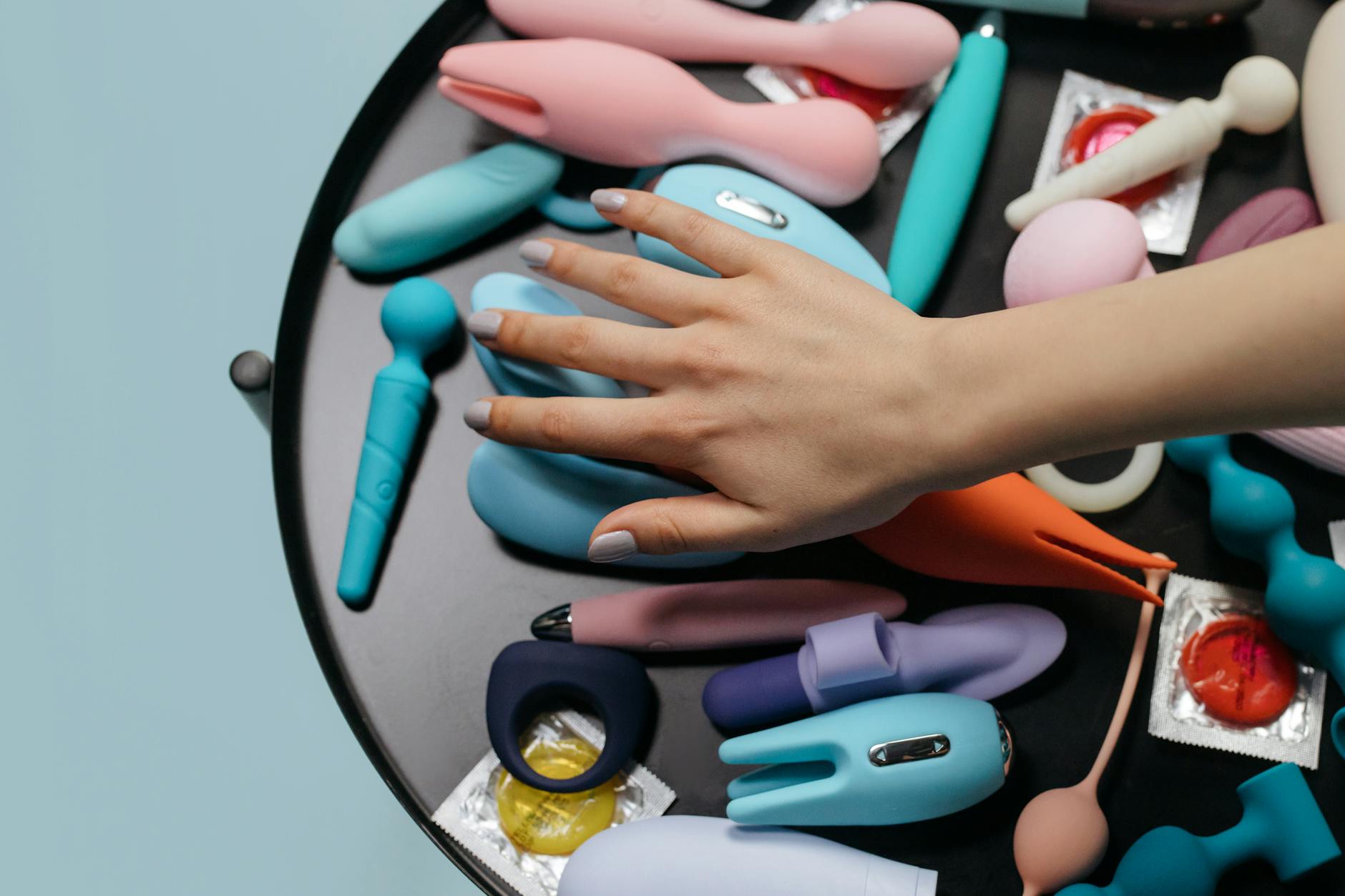
Let's be real about grief and pleasure
Grief kills desire. Not metaphorically. Your nervous system goes into protection mode. Cortisol spikes, oxytocin drops, and the idea of pleasure feels weirdly wrong. Like you've betrayed someone by feeling good. Like your body was supposed to pause with them.
Then one day it doesn't. The fog lifts slightly. And you wonder if you even remember how pleasure works anymore.
What grief does to sensation
When you're deep in grief, your body isn't just sad. It's hypervigilant. Your nervous system is scanning for threat, and pleasure feels unsafe because pleasure is the opposite of staying alert. Your touch sensitivity actually changes. Nerve endings become less responsive. Orgasms feel distant or impossible. Sometimes stimulation that used to feel good now feels like static.
This isn't depression (though grief and depression overlap). This is your brain's survival response. It's protective, but it's also limiting. And it can make you feel disconnected from yourself in a way that's deeply disorienting.
Here's the thing nobody tells you: that disconnection is temporary. Your body doesn't forget how to feel good. You're just in a phase where it needs to be reminded slowly.
Why lemon vibrators work for this specific moment
When you're coming back to pleasure after loss, the last thing you need is something aggressive or stimulating. You need something precise, gentle, and responsive to your own pace. The Lem's suction-based design is uniquely suited to this because it doesn't require you to chase sensation. The stimulation is consistent and controllable. You're not performing. You're not trying to orgasm. You're just feeling.
Let me explain the difference. Traditional vibration demands a certain energy. It's like it's doing something to you. Suction stimulation feels more like a conversation. You can modulate it. Pause it. Build it at your own rhythm. For someone relearning pleasure, that's invaluable.
Starting with your body as it is now
Before you touch a toy, you need to know something: your body has changed through grief, and that's not something to fight. It's information.
Spend a few days doing a simple check-in. No agenda. Just place your hand on your chest, your belly, your thighs. Notice what feels neutral. What feels slightly warm. What feels numb. You're not trying to feel anything. You're just observing. This is called somatic awareness, and it's foundational.
Many people grieving report that their genitals feel distant from the rest of their body. Like that area went to sleep. That's normal. Your nervous system deprioritized it. When you reconnect, you're essentially waking that part up.
Once you've done this awareness work, you can approach the Lem with realistic expectations. The first few times won't be about orgasm. They'll be about sensation. About rediscovering that you can feel.\n
The protocol that actually works
Here's what I recommend to clients coming back after significant loss:
Week 1: Touch without the toy. Spend 10-15 minutes just stroking your outer labia, your thighs, your pubic bone. Use oil or lubricant. The goal is to reintroduce touch sensation without performance pressure. No orgasm target. If it feels good, great. If it feels numb, that's also data.
Week 2: Introduction to low-intensity patterns. If the first week felt okay, use the Lem on its lowest setting (pattern 1) for 5 minutes, 3 times that week. Place it on your outer labia first, not directly on the clitoris. You're introducing sensation gradually. There's no rush.
Week 3: Slightly longer sessions. If sensation is returning, move to 10-minute sessions, 2-3 times weekly. You can now experiment with placement around the clitoral area, but still on the lowest patterns. The point is consistency, not intensity.
Week 4 and beyond: You're the guide. Once you feel something shifting, you can trust your own pace. Some people find that grieving bodies orgasm differently. Shallower sometimes. More concentrated other times. That's fine. Your pleasure isn't supposed to look like it did before.
What to watch for
If you start to feel anxiety when you touch yourself, that's a sign to pause. Anxiety is your nervous system saying "we're not ready yet." Don't push through it. Grief isn't something you overcome by force. It's something you move through.
If numbness persists past week 3, consider whether you need more time. Some people aren't ready after a month. That doesn't mean they won't be ready in six months. Your timeline is yours.
If pleasure becomes associated with guilt or shame, talk to someone. That's when professional support helps. A therapist trained in grief and body-based work can help you separate the grief from the pleasure in a way that's grounded and real.
The role of your partner (if you have one)
If you're partnered, this is worth a separate conversation. Your partner might feel rejected by your lack of desire during grief. That's understandable and also something to address directly. Reintroducing pleasure doesn't automatically mean reintroducing partnered sex. Those are two different timelines.
You might use the Lem alone first. Let your body remember. Then, when you're ready, your partner can be present without touching. Just there. Gradually, if you want, they can learn the patterns you like. But that's a choice, not a return to normal.
What happens when sensation starts to come back
Many of my clients report that when pleasure returns after grief, it feels different. Deeper sometimes. More textured. Because you've been through something. Your body has stored that. And when pleasure emerges again, it's not the same pleasure you had before. It's pleasure that knows what loss feels like.
That's not sad. That's actually profound.
Some people find that suction-based clitoral vibrators become their go-to because they're so responsive to intention. The slower you want to go, the slower you can go. When you're relearning your pleasure after any disruption, control matters. Lem vibrators give you that control.
When to reach out for more support
If three months have passed and you feel no shift in desire or sensation, or if pleasure brings up panic or deep shame, that's worth discussing with a grief counselor or therapist. Complicated grief can hide in your body. A professional can help you untangle it.
Similarly, if your partner is struggling with your changed desire, couples therapy designed around life transitions (not just relationship repair) can help. You're not fixing your marriage. You're both learning to grieve and reconnect at the same time. That takes skill.
Grief changes you. It changes how you want to touch and be touched. The goal isn't to get back to where you were. It's to discover where you are now, and to honor that.
FAQ
How long after a loss should I wait before trying to reconnect with pleasure?
There's no universal timeline. Some people feel ready at six weeks. Others need a year or more. The marker isn't time. It's whether you feel any opening toward pleasure at all, even a small one. If grief still feels total and suffocating, you're probably not ready, and that's completely okay. Grief is the priority. Pleasure will still be there when you are.
Will using a vibrator feel like I'm dishonoring the person I lost?
That guilt is extremely common, and it's worth sitting with. Your pleasure doesn't diminish your grief. It coexists with it. Many people find that reclaiming pleasure is actually part of honoring the dead. You're choosing to live fully. You're choosing to feel. That's not betrayal. That's survival.
Can grief permanently change how my body responds to touch?
Grief can create temporary shifts in sensation and arousal. But those are usually reversible as your nervous system settles. What doesn't usually reverse is the emotional depth. You'll feel pleasure differently because you've lived differently. That's not damage. That's growth.
Should I tell my partner I'm using a vibrator to work through grief?
If you're in a long-term partnership, honesty helps. You might frame it as "I'm relearning my body and what feels good to me. This is part of that process." If your partner feels threatened, that's a conversation to have openly. But your body's healing isn't conditional on their comfort. You get to do this for yourself.
Is it normal to feel disconnected from my genitals after loss?
Completely normal. Grief centralizes in your chest and your gut. Pleasure lives in your genitals. When you're grieving, energy moves away from pleasure and toward protection. That disconnection can feel very strange, like that part of your body isn't yours anymore. Gentle, consistent touch over time rewires that. You're not broken. You're just in recovery.
What if pleasure feels wrong or selfish while I'm still grieving?
That's your nervous system being cautious. Part of you might believe that staying numb honors the person you lost. But pleasure isn't a betrayal of grief. It's a sign that your body wants to live. You can grieve and feel good. You can miss someone deeply and also experience joy. These aren't opposites. They coexist in every grieving person who lets themselves heal.